IIPM Admission

Showing posts with label Dean of IIPM. Show all posts

Friday, February 01, 2008

Nurturing talent in-house to build a system based on freedom & driven by passion is clearly the HCL way…

Life Nurturing talent in-house to build a system based on freedom & driven by passion is clearly the HCL way…begins from a seedling. One might have seen a gardener planting a seedling in the moist soil and gently sprinkling some water on it. Under the watchful eyes and care of the gardener the seedling finds it roots and eventually starts to take shape. Vivek Punekar, Vice-President, HRD, HCL Infosystems, believes in playing a role similar to that of a gardener. “We handpick people from various campuses across the country and then groom them in-house so that they can brace up leadership positions later on,” elaborates Punekar. Little wonder that 90% of the top management cadres at HCL today are the ones that had joined the organisation as management trainees & have carved their paths to reach top positions at HCL.

A gardener also effectively plays the role of a facilitator, ensuring that the seedling is exposed to enough sunlight that helps in the strengthening of its roots and has adequate access to water at all times to foster its continuous growth. Punekar too follows a similar approach by exposing the young blood in the organization to different challenges so that they easily get accustomed to the work-life and also provides them with a support system in case things get a little out of hand. In today’s IT boom, a whole lot of emphasis is being laid on the human capital. Undoubtedly, HCL too falls in the same bracket, but as it is more a technology driven company rather than soft ware driven, so the role of HR is different. Emphatically states Punekar, “We are not a typical soft ware company as most IT companies are perceived as, hence the HR challenges faced by us are very different from them. To take one example, our employees are spread over 360+ locations.” Yet, there are many innovative techniques that HCL practices to get talent on board and nurtures that talent to bring to the surface the leaders of tomorrow. The company’s mantra is, ‘Catch them young & set their minds on fire’. And clearly the final objective of all HR practices at HCL is to ensure that every employee develops a keen sense of ownership for the company, and thus the company has a culture of ‘freedom’ at the workplace. Explains Punekar, “Freedom in HCL means, letting people make their own mistakes and learn from them. After all it is your own company, you are the owner so you are allowed to make your set of mistakes and it is only through mistakes that the employees can learn.” An open culture also helps to create a learning environment, which is an important factor for any IT company. Adds Punekar, “Although it’s a difficult task to achieve yet once this objective is achieved, then you would never face challenges in the form of retaining talent.”

For Complete IIPM Article, Click on IIPM Article

Source :
IIPM Editorial, 2007

An
IIPM and Professor Arindam Chaudhuri (Renowned Management Guru and Economist) Initiative

For More IIPM Info, Visit Below....
The Sunday Indian - India's Greatest News weekly
IIPM Mumbai Parables - Stories that change life
IIPM, ADMISSIONS FOR NEW DELHI & GURGAON BRANCHES
IIPM, GURGAON
ARINDAM CHAUDHURI’S 4 REASONS WHY YOU SHOULD CHOOSE IIPM...
IIPM Economy Review
IIPM :- Cicero's Challenge is going global
The Indian Institute of Planning and Management (I...
Time for Awards at IIPM
STUDENTS AGAINST CORRUPTION & KICKBACKS : SACK
Heavy dut(t)y stress Sanjay Dutt Bollywood Actor
The Business of B-School Rankings & The Big Farce

Friday, January 11, 2008

The place does matter!!!


IIPM, ADMISSIONS FOR NEW DELHI & GURGAON BRANCHES

While Paul Otellini, CEO, Intelevery IT major is now turning to India for expansion, Intel was perhaps one of the first companies to reach the Indian shores in 1989. At that time, Intel only had its sales and marketing operations in India. When asked about the tipping point, John McClure, Director Marekting Intel South Asia divulged to B&E, “Th e tipping point for Intel India was to set up the Intel India Development Centre (IIDC) in Bangalore in 1998.” Craig Barrett has already outlined the importance of India in Intel’s global plans. As a part of his plans to make India the hub of R&D for Intel, Barrett announced massive investment of $1 billion into the Indian market across various verticals. “The $1 billion investment demonstrates Intel’s long-term commitment and builds on the foundation we have created during our 10 years of operations in India. We will grow our local operations, boost venture capital investments and work closely with the government, industry & educators” said Barrett. Well, one could easily unearth that the kind of confidence Barrett has for Intel India would have made the executives here more responsible and nervous at the same time. Though we could not sense the frenzy about the very famous Intel vs. AMD fiasco at the IIDC Bangalore, the executives definitely looked completely committed to the cause of Intel globally.

In an exclusive conversation with B&E, Rahul Bedi, Director Corporate affairs, Intel South Asia and India Business Operations Manager Intel India maps out the contribution & importance of Intel India, “I cannot name the exact products being developed here in IIDC, but these are products that are going to be extremely critical for Intel. IIDC will have a significant impact on the bottom-line of the company.”

When quizzed about the contribution of IIDC to Intel’s global strategy, John McClure, further outlines, “IIDC has been steadily contributing to the global development of Intel’s products. Part of the work involved in getting quad core chips ready for the global market was undertaken here. No other company in India undertakes testing of this level of complexity. IIDC is also involved in the complete line up of Intel’s quad core chips.”

Well, for the uninitiated, the contribution of IIDC is not restricted to Intel’s quad core chip sets. The company’s Bangalore centre has slowly emerged as its global hub for R&D. Similarly, IIDC also played a key role in the launch of the Intel’s new mobile platform Intel Centrino Duo and Intel Centrino Pro processor technology for both consumer and business computing. IIDC also planned and executed key design and validation activities on the Intel® 965 chipset (codenamed Crestline), which forms part of the new Intel Centrino Processor technology platform. Finally, IIDC also provided critical hardware and soft ware applications engineering support to Intel OEMs and ODMs in Asia Pacific and Japan to ensure readiness to launch their platforms along with Intel. The different divisions of IIDC have contributed to Intel’s global growth like its Mobility Group contributed to the Centrino Duo platform, Digital Enterprise Groups’ (DEG) contributed to development of quad core processor and the Corporate Technology Groups’ (CTG) contributed to the world’s first programmable processor to deliver teraflops performance. The Bangalore team is also becoming the primary competency centre for IT related supply chain applications.

For Complete IIPM Article, Click on IIPM Article

Source :
IIPM Editorial, 2007

An
IIPM and Professor Arindam Chaudhuri (Renowned Management Guru and Economist) Initiative

For More IIPM Info, Visit Below....
ARINDAM CHAUDHURI’S 4 REASONS WHY YOU SHOULD CHOOSE IIPM...
IIPM Economy Review
IIPM :- Cicero's Challenge is going global
The Indian Institute of Planning and Management (I...
After CDMA, will nokia miss the 3G bus ?
Time for Awards at IIPM
STUDENTS AGAINST CORRUPTION & KICKBACKS : SACK
Heavy dut(t)y stress Sanjay Dutt Bollywood Actor
The Business of B-School Rankings & The Big Farce
36TH Full Time Programme In Planning & Entrepreneu...

Thursday, January 03, 2008

ITC’s satiating its appetite for food!!!


ARINDAM CHAUDHURI’S 4 REASONS WHY YOU SHOULD CHOOSE IIPM...

The BingoIndian conglomerate ITC Ltd. has gobbled an Australian agri-biotech company – Technico Pty Ltd. However, the amount of the deal has been kept under wraps. The deal is going to strengthen ITC’s food division. The deal was implemented through the investment arm Russell Credit, a fully owned subsidiary of ITC. Technico offers mass potato supply chain management & uses the exclusive Technituber technology which is known to transform the global seed potato industry. Technico has its business spread around Canada, China, the Middle East & India and utilises this reach to source potatoes all through the year for bulk users.

For Complete IIPM Article, Click on IIPM Article

Source :
IIPM Editorial, 2007

An
IIPM and Professor Arindam Chaudhuri (Renowned Management Guru and Economist) Initiative

For More IIPM Info, Visit Below....
IIPM Economy Review
IIPM :- Cicero's Challenge is going global
The Indian Institute of Planning and Management (I...
After CDMA, will nokia miss the 3G bus ?
Time for Awards at IIPM
STUDENTS AGAINST CORRUPTION & KICKBACKS : SACK
HRIC :- Human Resource Intelligence Cell
Heavy dut(t)y stress Sanjay Dutt Bollywood Actor
The Business of B-School Rankings & The Big Farce
36TH Full Time Programme In Planning & Entrepreneu...

Tuesday, December 11, 2007

Are you saying I don’t have to


IIPM PUBLICATION

Sheolul Smey?! ...


For those who thought that that was the only option...
WhenAre you saying I don’t have to it’s a question of money, everybody is of the same religion – goes the adage aptly! The general trend of human beings has always been to secure their future... in whatever way they can! There are varied options for all age groups. So why should senior citizens stay back? Firstly, to get introduced to the concept, reverse mortgage schemes open the option of receiving a fixed monthly income for a stipulated span of time. Oh no, it’s not free of cost. It’s all against your house, but even as you reside in it! Though this innovative concept had received a mention in Budget 2006 and also in Budget 2007, banks and housing finance companies (HFCs) had no option than to wait for the final guidelines from the National Housing Bank, which thankfully arrived last month, raising expectations of a flurry of reverse mortgage products.

It is expected that private service providers like ICICI Bank and HDFC Bank and also public sector players like Bank of Baroda, Oriental Bank of Commerce, Punjab National Bank, GIC & LIC Housing Finance will be among those off erring a plethora of such products. S. K. Mitter of LIC Housing Finance Limited told B&E, “We are working on the proposal and the products will be launched in a couple of months.” However, first in the series to launch reverse mortgage schemes were Dewan Housing Finance Corporation Limited and Punjab National Bank.

Analytically, these schemes are more similar to pension schemes for senior citizens living in an accommodation owned by them. Financially, it works in a manner that’s quite opposite to buying a house on loan, wherein it’s necessary to pay an equated monthly installment to your bank. In reverse mortgage, the agreement terms are such that while the house is mortgaged to the bank, the bank is supposed to pay out equated monthly amounts to the other party.

Though in this case, technically, the house belongs to the bank, still it’s possible to live in the house till the person (who has mortgaged) and his spouse are alive, even after the mortgage tenure is getting over! As per the norms, a house owner, who has crossed 60 years of age, is eligible to seek a loan up to 60% of the value of residential property by mortgaging the same for a maximum period of 15 years with a bank or a housing finance corporation, while retaining the right to stay in the property. In terms of receiving the equated amounts, the receiver can opt for monthly, quarterly, annual or lump sum payments, or even payments at any other point in time as per his/her discretion. Also, a revaluation of the property has to be undertaken by the bank once every five years. On the event of death of the receiver, the bank offers the legal heirs an option to repay the loan. If the loan is not paid back, the bank has the authority to sell the house and pay back the difference, if any, to the heirs.

Quite popular in developed countries, reverse mortgage is an effective social security measure, which will find a lot of application in India; especially at a time when senior citizens, in dire need of money, sometimes end up with no option other than selling their house and belongings lock, stock and barrel. But the government necessarily needs to ensure that the focus of such products remains ‘social security’ rather than profits. Is that possible? Of course yes, and with classic positive repercussions.

B&E edit bureau: Sunanda Roy

For Complete IIPM Article, Click on IIPM Article

Source :
IIPM Editorial, 2007

An
IIPM and Professor Arindam Chaudhuri (Renowned Management Guru and Economist) Initiative

For More IIPM Info, Visit Below....
ARINDAM CHAUDHURI’S 4 REASONS WHY YOU SHOULD CHOOS...IIPM :- Cicero's Challenge is going global
The Indian Institute of Planning and Management (I...
After CDMA, will nokia miss the 3G bus ?
Time for Awards at IIPM
STUDENTS AGAINST CORRUPTION & KICKBACKS : SACK
HRIC :- Human Resource Intelligence Cell
Heavy dut(t)y stress Sanjay Dutt Bollywood Actor
The Business of B-School Rankings & The Big Farce
36TH Full Time Programme In Planning & Entrepreneu...
Courtney to quit courting cigarettes!

Tuesday, November 27, 2007

Today, India is where China was in the 1990s. The sheer momentum now appears unstoppable


IIPM BEST B-SCHOOL

The Rise Of India

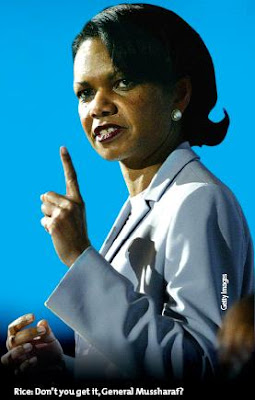
Just Rice: Don’t you get it, General Mussharaf?look at the kind of global leaders that are making a beeline for India and the picture that emerges is crystal clear. The King of Saudi Arabia was in Delhi in January. French President, Jacques Chirac, dropped by for a brief visit a week before George Bush arrived. Australian Prime Minister, John Howard landed in Delhi on March 6, 2006 to discuss uranium supplies. Vladimir Putin of Russia and Wen Jiabao of China are also scheduled to come by.

The reason: The world is finally waking up to the fact that the Indian elephant – in deep slumber for centuries – is now awake and beginning to dance. The sheer volume of economic opportunities available in India is mind boggling for global investors. Says Vijay Govindrajan, Professor of Strategic Management at the Tuck School of Business, Dartmouth College: “Today, India is where China was in the 1990s. The sheer momentum now appears unstoppable.”

Without getting into the details, what exactly does the nuclear deal mean for India? Quite simply, if the US Congress does clear the deal, the future of India’s energy security will become considerably brighter. If India does raise electricity generated from nuclear energy to 30% of total power generated, American, French, British and Russian companies will be competing for new nuclear power plants with a total capacity of about 40,000 MW in the next few years. That is a Rs.2 trillion business opportunity waiting in the wings. No wonder, Ratan Tata and Anil Ambani want to enter the nuclear energy sector. Business opportunities apart, the killer advantage for India will be reduced dependence on oil supplies that look so very iff y with the way instability, unrest and civil war is unfolding in West Asia, and the way China is consolidating its hold on global oil supplies.

For Complete IIPM Article, Click on IIPM Article

Source :
IIPM Editorial, 2007

An
IIPM and Professor Arindam Chaudhuri (Renowned Management Guru and Economist) Initiative

For More IIPM Article, Visit Below....
!
History of IIPM ! IIPM Mission ! IIPM Curriculum ! IIPM Project Based Learning ! IIPM GOTA ! IIPM Amaze'07 !

Tuesday, November 20, 2007

The Sony Story


IIPM PUBLICATION

India Moving up the value chain, new models from LG and Motorola are giving Nokia a hard timehas seen many such giants set up manufacturing facilities, only to withdraw later on as they found the Indian market hostile. A typical example is Sony, which trimmed down its manufacturing operations in Dharuhera, Haryana and now imports almost all of its audio products and CTVs (colour televisions). The Japanese giant’s performance in the Indian consumer electronics industry mirrors what is happening across the world: Sony is being battered by nimble footed and aggressive companies like LG, Samsung and even Microsoft in the segments that it used to dominate. In India, the Korean Chaebols LG and Samsung have emerged as clear leaders, both in terms of market share and brand visibility. Indian brands like Videocon and Onida too have hung on tight, leaving Sony quite far behind in the sweepstakes. According to an advertising industry professional that services the Videocon brand: “If you can get a good quality 29 inch fl at screen TV for Rs 15,000, will you pay Rs 30,000 for a 21 inch TV?” This is a question that Sony needs to ask itself if it is serious about emerging as a market leader in India. Sunny Sodhi, owner of a travel agency and a heavy mobile phone user, says: Nokia will not have the going as easy as it did in the past. The Indian market is too big and too tempting. Rivals will go all the way to grab the market share away from Nokia”.

P&G changed gears after being taught a lesson by the price sensitive Indian consumer seeking “value for money”. Till 2003, market leader Hindustan Lever Ltd. (HLL) faced a greater threat from its own fl aging growth than from P&G. All that changed last year with P&G becoming an aggressive price warrior. Till date, HLL and P&G continue to fight bruising price battles. P&G has gained significant market share, though accurate figures are difficult to obtain.

For Complete IIPM Article, Click on IIPM Article

Source :
IIPM Editorial, 2007

An
IIPM and Professor Arindam Chaudhuri (Renowned Management Guru and Economist) Initiative

For More IIPM Info, Visit Below....
!
IIPM Alliances ! IIPM Ranking ! IIPM Director's Desk ! IIPM Dean's Message !

Wednesday, November 14, 2007

Even though there has been a negative growth earlier, HH continues to out-compete the market


IIPM BEST B-SCHOOL

Now Even though there has been a negative growth earlier, HH continues to out-compete the marketthat the entry level game has been further spiced up with the up-gradation of the old workhorse Splendor, isn’t HH holding on a bit too long? When B&E investigated into the matter of HH’s continued infatuation with the entry segment, Dua clarified “When you have a high potential product like the Splendor then you should leverage it fully. The Splendor Consumer is intensely brand loyal, t he re fore the new Splendor NXG will help us retain the consumer within the Splendor family.” As per the company’s annual reports, HH is heavily banking on the 100 million consumers who find themselves under the Rs.200,000 income bracket. The company feels that barely 2% of the Indian hoi polloi are presently covered by the two wheeler industry and there is immense potential at hand. Even though the so called ‘ideal candidates’ might move into the HH territory, there still might be some hiccups! Firstly the Indian hinterlands are still outside the financing purview. And secondly the consumers might have other appealing options. The foray of super affordable cars in the newly formed entry level four wheeler segment will surely lure away some first time buyers and HH along with other ‘entry segment’ dependent players will surely face the heat of this new found ‘four wheeled competition’.

Furthermore, growing demands on natural and economic resources has brought about pressures on the company’s margins. Even though Hero Honda ecstatically claimed that it was the only company to grow at 19% this year (while the entire sector registered negative growth rate at the same time), things won’t be easy as sustaining profits & market share is a paramount requirement. Dua was however quick to point out, “The inflationary figures are encouraging and it seems that the market will expand even though there has been a negative growth earlier. Hero Honda continues to out-compete the market and we are confident that we will improve further.” In a nutshell it can be safely assumed that the market will undoubtedly recover but Hero Honda may not be a major reason behind this overturn. This is evident from the fact that during FY07, net profit fell by 11.74%, the only two wheeler company to report.

For Complete IIPM Article, Click on IIPM Article

Source :
IIPM Editorial, 2007

An
IIPM and Professor Arindam Chaudhuri (Renowned Management Guru and Economist) Initiative

For More IIPM Article, Visit Below....
IIPM : The Indian Institute of Planning and Management
IIPM is a best b-school. It is a business school of management. It's full name is The Indian Institute of Planning and Management. ...

IIPM: The Indian Institute of Planning and Management
IIPM's Full time & Integrated programs in National Economic Planning and Entrepreneurship are in a different league. Students are exposed to case studies ...

IIPM BEST PUBLICATION
Lacking the punch to scare us Indians out of our skins iipm are terms like ‘pollution’, ...... IIPM News > News in Media > The Political Criminal Circus ...

IIPM: IIPM : Pas(ay) the Parcel!
IIPM is a Best B-School. It is a institute of business management. Its full name is The Indian Institute of Planning and Management. ...

IIPM Infrastructure : Campus « IIPM
In terms of infrastructure, campus and technology support, IIPM is rated amongst the top institutes of the country. IIPM’s academic campuses in Asia are ...IIPM PUBLICATION: IIPM : Campus Placements IIPM students are winners all the way..." {Source: The Times of India, June 2002} "...the icing on the cake has proved to be the 100% placements of the ...

IIPM MANAGEMENT INSTITUTE On "IIPM - Arindam Chaudhuri - Planman"
And the IIPM, which was founded as recently as 1973, now claims to be the world’s largest business school, with 5000 postgraduate management students in ...

IIPM: The Indian Institute of Planning and Management
All students who undertake IIPM’s Entrepreneurship Programme receive an additional International MBA/BBA Degree from INTERNATIONAL MANAGEMENT INSTITUTE ...

IIPM is a BEST MBA INSTITUTE
IIPM is a premier learning institute to excellence in management research and ... An IIPM and Professor Arindam Chaudhuri (Renowned Management Guru and ...

IIPM - The Best B School on Earth: Home
IIPM: Established in 1973; IIPM offers courses in Planning and Entrepreneurship, leading to Bachelor of Business Administration (BBA) and Master of Business ...

Thursday, November 01, 2007

Strong Network

The Strong Networkboard of directors are well experienced in the network marketing for at least 12 years. They acknowledge the painful feelings of the new distributor in the field. They plan to eliminate the bitter experience of the new distributor. Mr.Rajasekhar, the Managing Director of the firm takes pride in telling that they are planning to expand throughout the country by 2008. They largely deal with land plot marketi n g , since they believe that it is an asset which has very less opportunity to deplete in cost. They are primarily concentrating in the areas which are situated in 100 kms around the metropolitan city of Chennai. Plots are already booked in places like thanjavur, uthramerur, kanchipuram, trichy, dhindivanam ans so on.

There are lots of success stories which are spun around the firm in reality. One of which is of Mr.Shanmuga Sundaram, who was pushed to the state of committing suicide when he was drowning in debts which was piled to Rs.31 lacs. The firm has totally changed his life and its style, making him a millionare.

Kingmakers are creating the wave of the future, a business model that will gain momentum, grow in acceptance and legitimate enough, which will eventually replace most other forms of marketing.

For Complete IIPM Article, Click on IIPM Article

Source :
IIPM Editorial, 2007

An
IIPM and Professor Arindam Chaudhuri (Renowned Management Guru and Economist) Initiative

For More IIPM Article, Visit Below....
http://jroller.com/page/info
http://jroller.com/page/SUCCESS
http://my.opera.com/sonu-a/
http://my.opera.com/sonu-b/
http://free-blog-site.com/iipm_publication
http://free-blog-site.com/iipm_2
http://www.seedwiki.com/wiki/iipm_publication/iipm_publication
http://www.seedwiki.com/wiki/iipm/
http://www.seedwiki.com/wiki/iipm_b-school

Wednesday, October 24, 2007

We have seen public money moving away from banking system to other financial entities


IIPM BEST B-SCHOOL

“Credit ICICI Bankdemand far outpacing deposit mobilisation did pose a challenge for most banks to meet the resource requirements which was amply reflected in the north-bound journey of interest rates, both on the assets and liabilities side of banking sector’s balance sheets since the latter half of FY ’07,” adds Rana Kapoor, CEO, Yes Bank. According to the estimates of Crisil, banks’ deposit cost was up by 60 basis points in FY ’07 to 5.1% and will go up by another 50 basis points in FY ’08. CRISIL’s analysis highlights that the proportion of bulk deposits (deposits above Rs.10 million), which carry higher interest rates and have relatively shorter tenors, has increased over the past five years. Surprisingly, more than 50% of the term deposits during the last five years were mobilized in 2007, and had tenures of less than one year, resulting in frequent deposit renewals and thus also exposing banks to interest rate risk. According to Tarun Bhatia, Head, Financial Sector Ratings, CRISIL “Several banks were able to fund their credit growth during the past couple of years by selling their excess statutory liquidity ratio (SLR) investments. However, this may no longer be feasible, given that the average SLR is currently estimated at 28%.”

For Complete IIPM Article, Click on IIPM Article

Source :
IIPM Editorial, 2007

An
IIPM and Professor Arindam Chaudhuri (Renowned Management Guru and Economist) Initiative

For More IIPM Article, Visit Below....
http://www.fairspirit.com/sonu00/
http://just-look.blogdrive.com/
http://sonu-hh.livejournal.com/
http://sonu501.wordpress.com
http://sonu119.zbloggy.com/
http://dearsonu.wordpress.com/
http://sonu72.tblog.com/
http://surenderlatwal.tripod.com/IIPM-B-SCHOOL/
http://surenderlatwal.tripod.com/IIPM/
http://businessmanagement.jeeran.com/
http://www-management-courses.ebloggy.com/

Thursday, October 18, 2007

Patching up our textiles!


IIPM PUBLICATION

It’s time for small and mid-sized textile companies to cash in on the true benefits of the removal of quota regime; & for a change, perhaps concentrate more on domestic markets


With For inner `piece', look inwards...into Indian markets!the removal of textile quota restrictions from January 1, 2005 – which allowed Indian companies unrestricted access to the US and European markets – the Indian textile industry is aiming for an export target of $50 billion by 2010 and a global share of 7% by 2012. Bracing well for this target, this sector has achieved a magnanimous export figure of Rs.613.21 billion for the period April-December 2006, at a growth rate of 7.67% (according to DGCI&S).

During 2006, overseas operations were on a high to tap the growing demand in the retail sector at home and globally. Global brands like Calvin Klein, Lacoste et al, penetrated further in the high-end market, while firms back home ventured into acquisitions abroad. To name a few – Welspun India bought 85% stake in British home-textile firm Christy, GHCL bought USA-based Dan River and Spentex Industries acquired Tashkent-To’yeota Tektfil of Uzbekistan.

For Complete IIPM Article, Click on IIPM Article

Source :
IIPM Editorial, 2007

An
IIPM and Professor Arindam Chaudhuri (Renowned Management Guru and Economist) Initiative

For More IIPM Article, Visit Below....
http://iipm-institute.21publish.com/
http://iipm-institute.21publish.com/vidhhyalaya
http://iipm-b-school.blog.ca/
http://www.sonulatwal.9k.com/
http://sonuright.bravehost.com/
http://docs.google.com/View?docid=dchw675g_19mp6p2t
http://www.freewebs.com/iipm-institute/
http://www.journalscape.com/iipm/

Thursday, October 11, 2007

Presenting the signature issue of India’s most influential business magazine


IIPM BUSINESS AND ECONOMY

YouThe power of unleashed animal spirits must have heard the story about seven blind men describing an elephant. If you are familiar with economics, you would also know how two economists have at least three opinions between them. Something similar happens when corporate analysts, rocket scientists and equity research professionals start assessing the profitability of a firm. Some would insist that the best way to assess the profitability of a company is to concentrate on cash profits generated by the business; after all, cash is king, queen and emperor, all rolled into one. Some others insist that there is simply no match for the ubiquitous earnings per share (EPS) when it comes to analysing profitability. There are rocket scientists who have an obsessive love affair with numbers and number crunching; for them, the only way to assess profitability is to go for net profits to sales ratio; or even better, net profits to assets ratio. Then there are fans of cash EPS, operating margins, EBDIT (earnings before depreciation, interest and tax) and myriad other indicators. For someone who is not so fond of number crunching and who gets put off by a needless display of complicated tables, most of this debate becomes a futile exercise.

For Complete IIPM Article, Click on IIPM Article

Source :
IIPM Editorial, 2007

An
IIPM and Professor Arindam Chaudhuri (Renowned Management Guru and Economist) Initiative

Thursday, October 04, 2007

Smoking soul out

An Smoking soul outapocalypse is just waiting to happen in India in the form of public health catastrophe due to excessive production and consumption of smoked and smokeless tobacco. It has one of the highest number of tobacco-attributable deaths, an estimated eight lakh people, (16% of global tobacco-attributable transience) from diseases like cancer, stroke, heart diseases, chronic bronchitis, impotence. A recent study in India revealed that people from the lower socio-economic strata smoke more. Shockingly, at times, smoking gets precedence over food and other essentials. However, an initiative by an NGO, Salaam Bombay foundation, in association with Mumbai police, to have ‘tobacco free police stations’, has raised hope. On the ‘World No Tobacco Day’, Chandigarh is a pioneer in banning smoking officially and Mumbai hopefully is to follow suit. Is the country heading to a smoke-free zone? Well... miles to go!

For Complete IIPM Article, Click on IIPM Article

Source :
IIPM Editorial, 2007

An
IIPM and Professor Arindam Chaudhuri (Renowned Management Guru and Economist) Initiative

For More IIPM Article, Visit Below....
The Business of B-School Rankings & The Big Farce
A beach resort… Come for a month, at least
IIPM ABOUT :- IIPM KNOWLEDGE CENTER
Money for nothing...
Topic: India – China: A Growth Comparison
Who says US is on the brink of a recession?...
Thanda karta sabko ek
IIPM Infrastructure : Campus
HRIC :- Human Resource Intelligence Cell


Wednesday, September 26, 2007

$100 billion and still counting...

May$100 billion and still counting... has proved to be a very good month for Indian economy, especially for Mutual Fund companies. In this month, in quick succession, the country’s GDP and BSE’s market capitalisation managed to go beyond the $1 trillion mark. To add more to the list, the Mutual Fund industry crossed the $100 billion milestone. Assets under management (AUM) by 29 fund houses were pegged at Rs.4.07 trillion. At the current rupee-dollar exchange rate of Rs.40.52, this interprets into a little over $100 billion. This milestone was reached on the back of a 16% rise in industry AUM in May over the previous month and a 48% jump over the May 2006 figures.

For Complete IIPM Article, Click on IIPM Article

Source :
IIPM Editorial, 2007

An
IIPM and Professor Arindam Chaudhuri (Renowned Management Guru and Economist) Initiative

For More IIPM Article, Visit Below....
36TH Full Time Programme In Planning & Entrepreneu...
IIPM going global
On "IIPM - Arindam Chaudhuri - Planman"
Warming up for doomsday?
If you have it, flaunt it
IIPM RANKED AHEAD OF FIVE OF THE IIMS
The Business of B-School Rankings & The Big Farce
A beach resort… Come for a month, at least

Friday, September 14, 2007

Back To The Future!


IIPM going global

Heat-struck!
A sweltering Heat-struck!heat wave – a direct ramification of global warming – is as much of a present day threat as it is a future hazard. After the super-scorching European heat wave of 2003 (that killed over 50,000 people there), and the ensuing heat wave in parts of Australia & the US, we thought perhaps it would be some relief in the years to come. But with death tolls still rising to record highs in all parts of the world, (notably so in the previously cold regions), water bodies drying up at an unparalleled rate, parched expanses expanding further – all that is to be blamed is the constant rise in earth’s temperatures.

For Complete IIPM Article, Click on IIPM Article

Source :
IIPM Editorial, 2007

An
IIPM and Professor Arindam Chaudhuri (Renowned Management Guru and Economist) Initiative

Tuesday, September 11, 2007

Toni Straka CEFA & financial journalist, Der Standard, Reuters

Trembling Toni Straka CEFA & financial journalist, Der Standard, Reutersbut inactive hands in the ECB seem to secretly wish for a rate hike to 4% in the June meeting, to curtail galloping money supply that keeps its range solidly in double digits or far above the ECB’s own target rate of 4.5% for money supply M3.

ECB president Jean-Claude Trichet has been preparing the ground with European politicians for a rate hike who fear that higher rates may bring fragile growth to a halt. Now the ECB is challenged by another growing problem. The US dollar is only a split hair away from its all-time lows and a rate hike in Europe could lead to the globally feared sell-off of dollar debt paper, pushing the greenback into uncharted territory.

As fundamentals build a case to sell out while the bull still rages worldwide, having lift ed shares worldwide onto levels that can be explained by easy central bank money but not by their earnings power, investors are left with few choices in order to protect themselves from the massive correction that very much looms on the horizon.

For Complete IIPM Article, Click on IIPM Article

Source :
IIPM Editorial, 2007

An
IIPM and Professor Arindam Chaudhuri (Renowned Management Guru and Economist) Initiative

Saturday, September 01, 2007

BRAND: Su-Kam

BRAND: Su-Kam
BASELINE: NA

4Ps TAKE: A Su-Kamfleeting look at this ad and one might think it is promoting meditation or yoga. With no taglines or VO (?!) and a storyboard that’s weak, this ad has nothing to boast. It completely loses out on the focus. What on earth were the creative directors thinking, that people will buy Su-Kam, for the sole reason that their old inverter stinks and gives out fumes. How many people face that problem? Moreover, only one person in the whole group gets affected by it, how logical is that! The ‘only’ good aspect that one just has to SMS and a Su-Kam inverter gets delivered ‘the next moment’ (an exaggeration!) has also been wasted. A little emphasis on the fact, maybe two lines of VO might have saved this ad (by the way, were all the voice and copy artists on leave?!). Former Gladrags Mr. India, Diwakar Pundir is made to look like an idiot and a flying joker. Guys, compared to any ordinary inverter, a pathetic ad is more dangerous, any day!

For Complete IIPM Article, Click on IIPM Article

Source :
IIPM Editorial, 2007

An
IIPM and Professor Arindam Chaudhuri (Renowned Management Guru and Economist) Initiative

Monday, August 20, 2007

Voice? Or have you begun VAScillating?


IIPM PUBLICATION

With revenues from voice shrinking, valueadd services is the new million dollar baby


We’veVoice? Or have you begun VAScillating? witnessed the death of the landline and the runaway success of mobile telephony in the country. Now India’s vast hinterlands are getting more connected everyday, and even before this last mile is achieved, the Indian wireless sector is already on the threshold of another revolution. This time the charge is being led by companies providing a host of Value Added Services (VAS) to keep you hooked to the mobile in your pocket. A dominant player in the VAS space is Bharti Telesoft (a Bharti Enterprise group company, started in 1999 as a back-end software provider). But, the dot-com bust in 2000 left it high and dry. Today, despite being an integral part of the billion-dollar Bharti Group, Bharti Tele soft is merely a $30 million company. However, with the advent of M-commerce and Live TV in the country, the company is like a caged tiger ready to pounce on the huge VAS potential. The company has come up with a three pronged strategy to reach the next level. Firstly, to build a world-class organization with the best people, capabilities, competencies, processes and quality systems. Second, to have a global footprint. And the third is to play the role of a consolidator when the inevitable consolidation in the VAS industry happens. In an exclusive interview with 4Ps B&M, Sanjiv Mital, CEO, Bharti Telesoft talks candidly about the VAS market in India, and how the company plans to cashin on this rapidly growing segment. A few excerpts from the interview:

For Complete IIPM Article, Click on IIPM Article

Source :
IIPM Editorial, 2007

An
IIPM and Professor Arindam Chaudhuri (Renowned Management Guru and Economist) Initiative


GoStats hit counter
GoStats hit counter